
The problem
Layouts, descriptions, and pricing versions differed from project to project. Valuable cost history remained trapped in individual workbooks, so each comparison required another round of interpretation.
We clean, classify, and verify the records your business already runs on, then make them usable for reporting, workflows, and AI.
Important records sit across spreadsheets, documents, and systems. Different formats and versions force teams to clean the same data before every decision.
How the product works
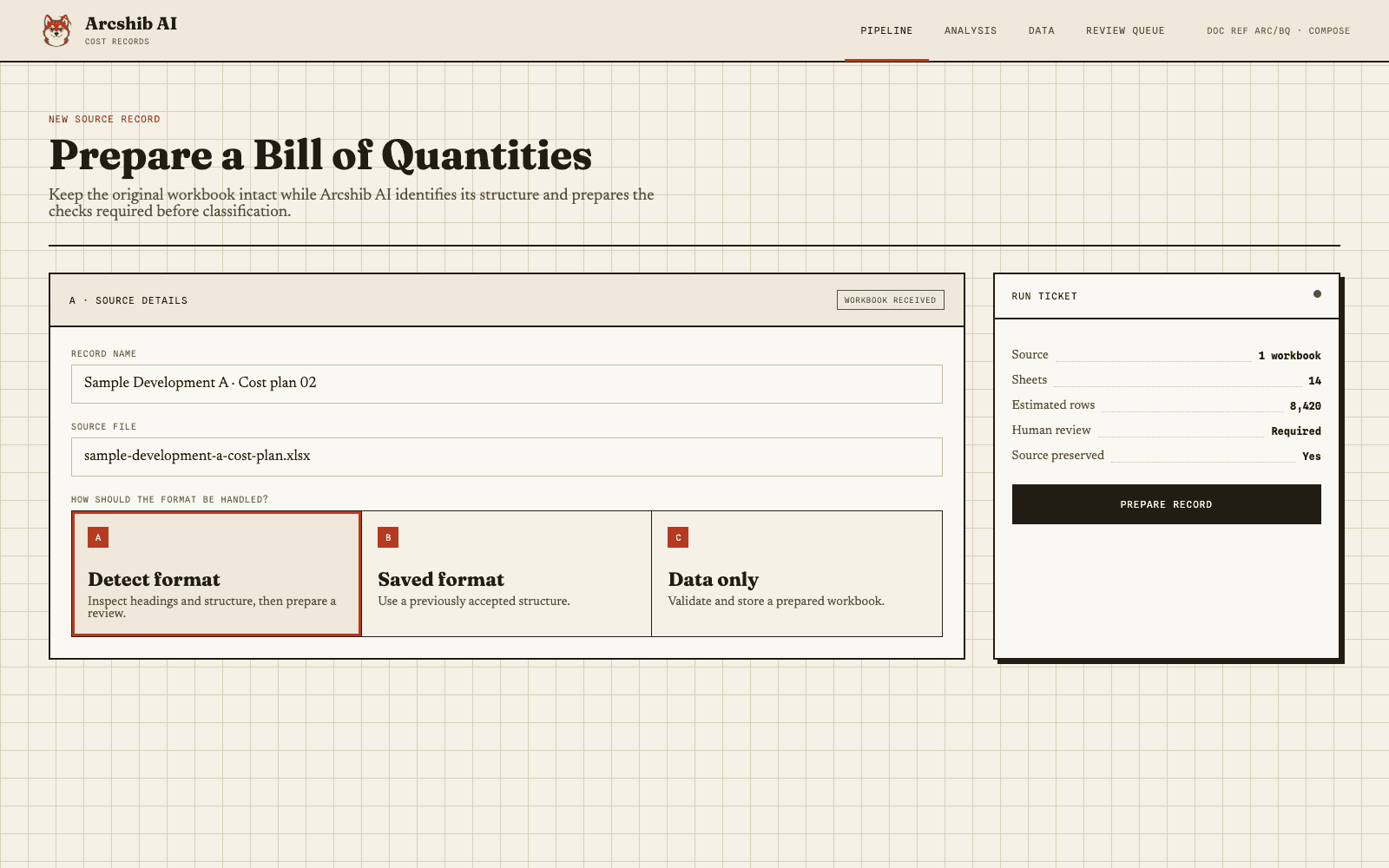
We preserve the source, adapt to each format, and check rows, quantities, amounts, and totals.
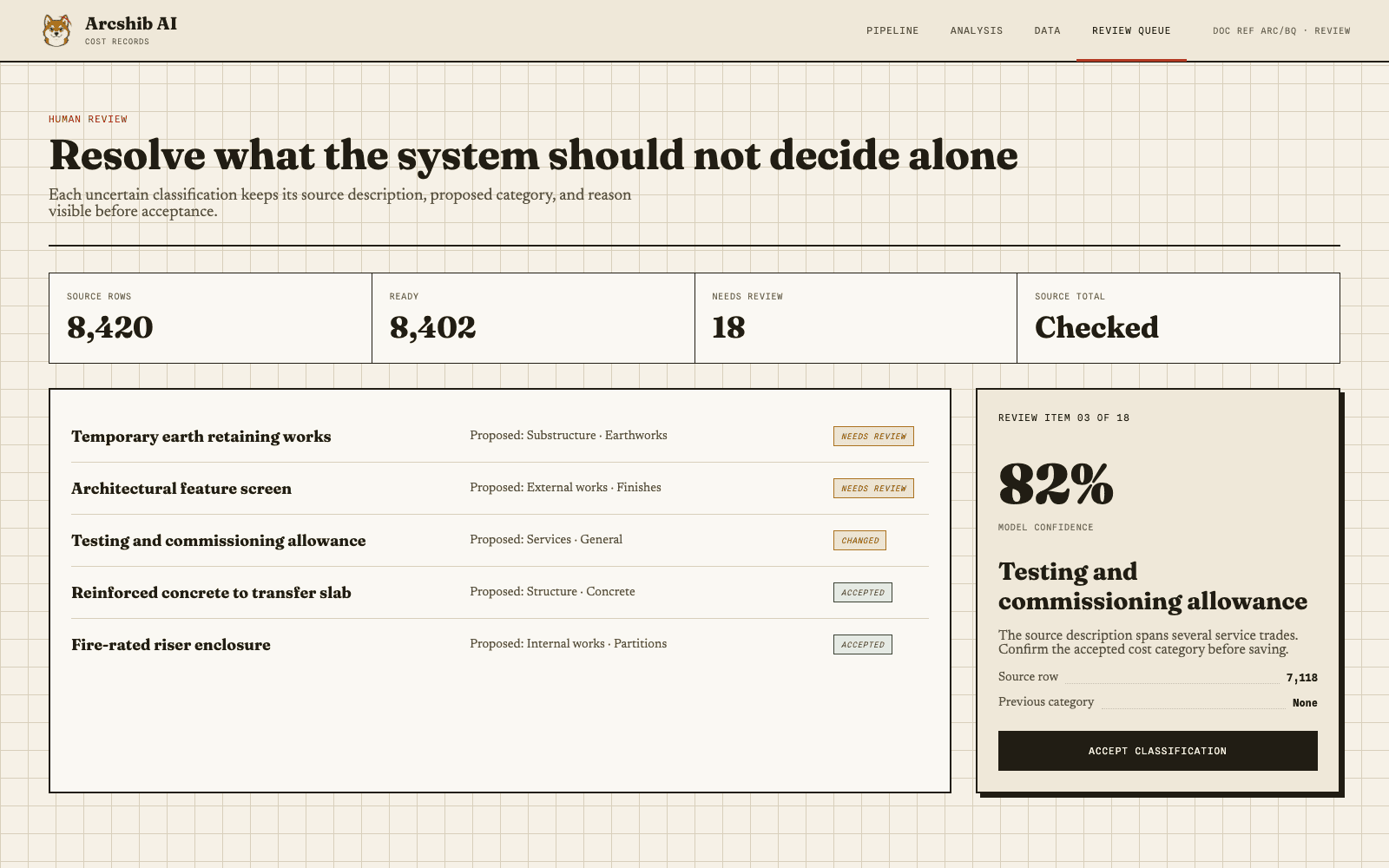
AI interprets ambiguous records. People review, correct, and approve the result.
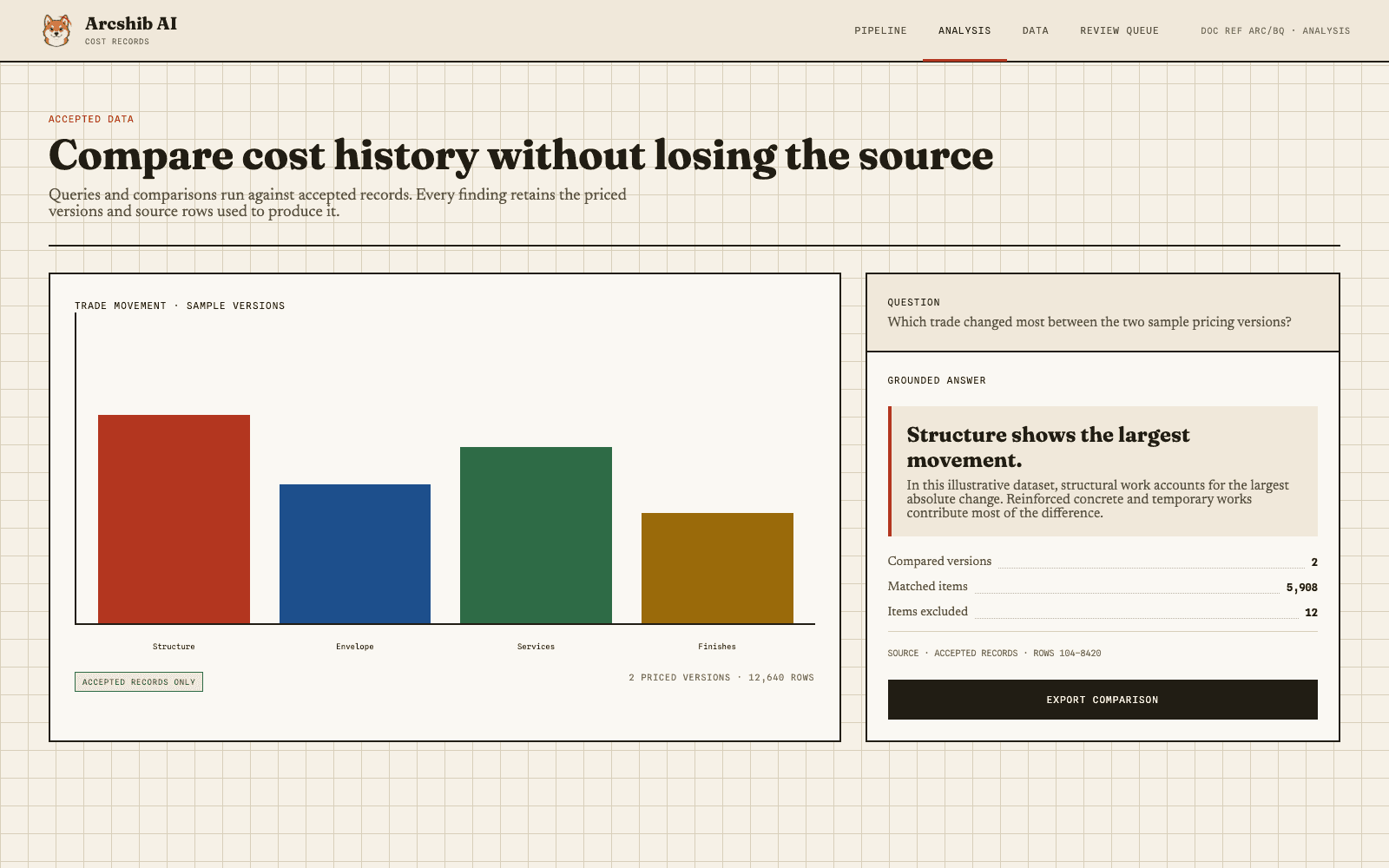
Accepted data powers comparison, reporting, workflows, and management decisions.
Property development · Reference implementation
Every project produced a dense, differently structured Bill of Quantities. The data existed, but it was difficult to compare or reuse for future cost control.
Arcshib AI grew from an AISEA Enterprise implementation for property-development cost data.


Layouts, descriptions, and pricing versions differed from project to project. Valuable cost history remained trapped in individual workbooks, so each comparison required another round of interpretation.
The system imports each Bill of Quantities, organises priced items into consistent cost categories, checks arithmetic and source totals, then routes the result through human review and approval.
Accepted data can be filtered, compared, and queried. The team can study cost drivers, compare pricing versions, trace answers to source records, and export structured workbooks to Excel.
The interface keeps source handling, review, acceptance, and analysis visible as separate steps.
Where to start
Start with one decision-critical workflow the company repeatedly cleans, reconciles, or interprets.
How we work
Most work starts with a paid Discovery & Audit. A validated scope can move straight into implementation.
We map the workflow, systems, data, decisions, constraints, and owners. The company receives a prioritised implementation direction.
We build alongside operational owners, test with real users, and document the work against clear acceptance criteria.
Once the first system works, management chooses the next workflow or data source.
Embedded implementation
A small team works alongside management and operational owners to deliver against clear acceptance criteria.
Leadership keeps control of decisions and the business.
The company keeps its Discovery & Audit report.
Ownership, licensing, access, and third-party dependencies are agreed before implementation.
Accountability
We commit to clear scope, working systems, testing, handover, and honest evidence. Business outcomes are measured with management.
Start with the records
We will define the first useful piece of work around the decision it needs to support.